Most people don't think about their jacket until the night before a trip. And that's usually when things go wrong.
You either pack the big, bulky one "just in case" — or it eats half your suitcase. Or you grab a light one and hope it'll be fine. Sometimes it is. Sometimes you're freezing in a new city, wishing you'd planned better.
Jackets take up space. They add weight. And if you're trying to travel light, especially carry-on only, that decision matters more than you think.
Picking the right travel jacket is about choosing something that actually fits your needs on that specific trip. The weather you're walking into. The way you travel. How much room do you have in your bag?
That's what we're going to figure out. Start with where you're going. A cold city in winter is very different from humid Southeast Asia. Then think about what you'll actually be doing there — walking all day, hiking, sitting in meetings or travelling between trains and airports.
And finally, look at your bag. If you're travelling carry-on only, that jacket better pack down small. If it doesn't, you'll end up wearing it the whole trip, whether you need it or not.
Travel Jacket vs. Regular Jacket: Why It Actually Makes a Difference
Here's something most people don't realise until they're already on the trip: your everyday jacket isn't built for travel.
It may work fine at home. Quick drive to the store. Commute to work. Dinner out. But travel is different. You're walking more. Sitting for long stretches. Stuffing things into bags. Pulling them back out. Dealing with weather that changes by the hour.
A regular jacket is usually heavier and doesn't pack down well. The pockets aren't designed for stuffing passports, boarding passes and all your other stuff.
A proper travel jacket is made with movement in mind. It's lighter, and it compresses better. The pockets are placed where you can actually reach them while standing in an airport line and don't look like a wrinkled mess after being folded into your bag.
How to Match a Jacket to Your Trip (Quick Decision Framework)
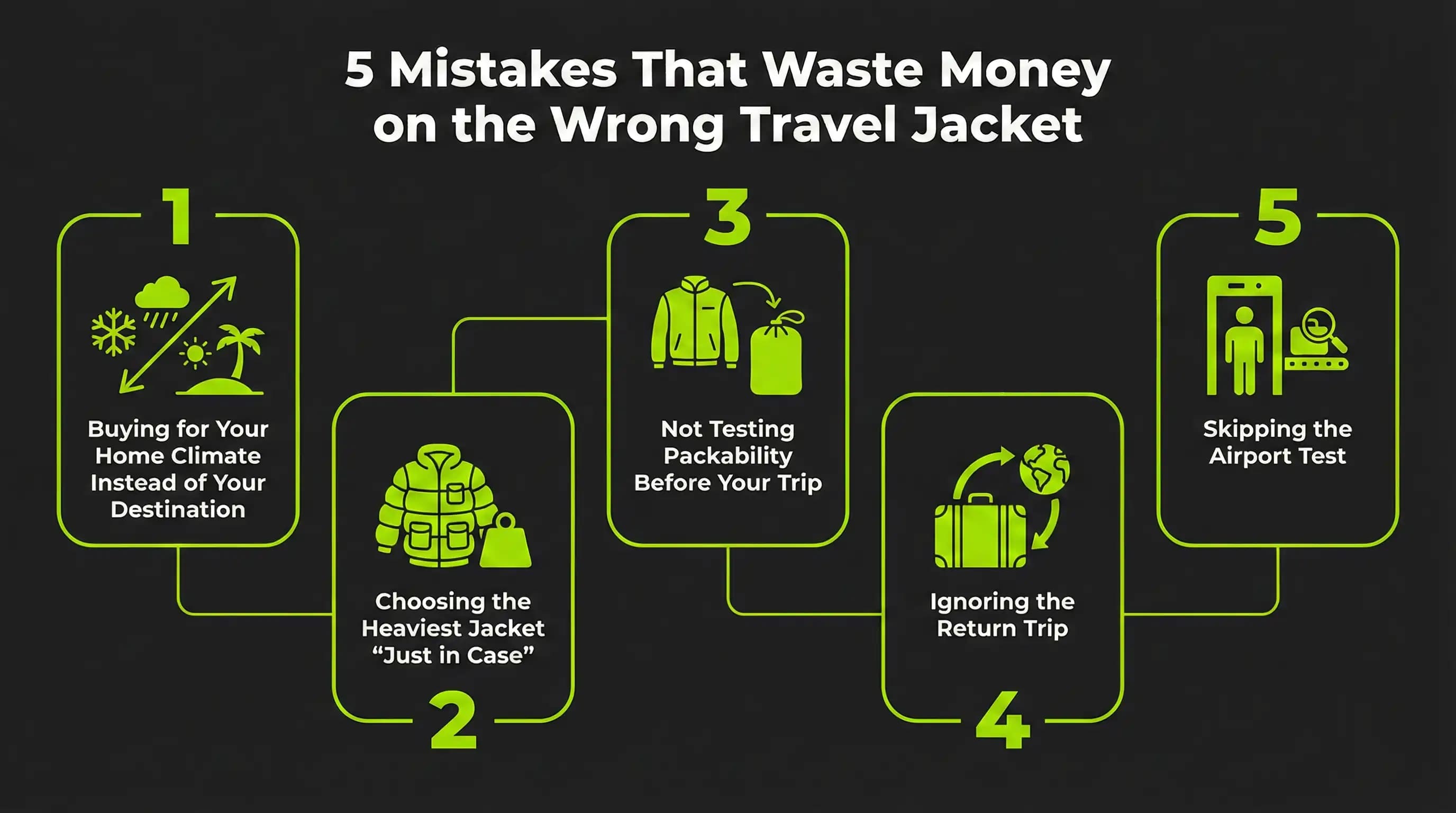
Don't overcomplicate this. Ask yourself three things: Where am I going? What am I doing there? And how am I packing?
Answer those honestly, and the choice gets a lot easier.
Start with Your Climate and Weather
Warm and humid? You don't need a heavy insulated jacket. A light layer that handles wind or a quick shower is usually enough.
Cold and dry? Now warmth matters more. Buy for the climate you're actually walking into.
Factor in Your Activities
City exploring, business meetings or hiking are all different activities and have different clothing requirements. If you'll be active, you need breathability and the ability to move freely. If you're mostly in cities, versatility and comfort matter more.
Consider Your Luggage Situation
Travelling carry-on only? Then packability isn't optional. If it doesn't compress well, you'll end up wearing it whether you need it or not.
This is where multi-pocket travel jackets can help. They are designed to carry most of your essentials right on your body, freeing up space in your bag and making moving through airports easier.
6 Types of Travel Jackets Compared
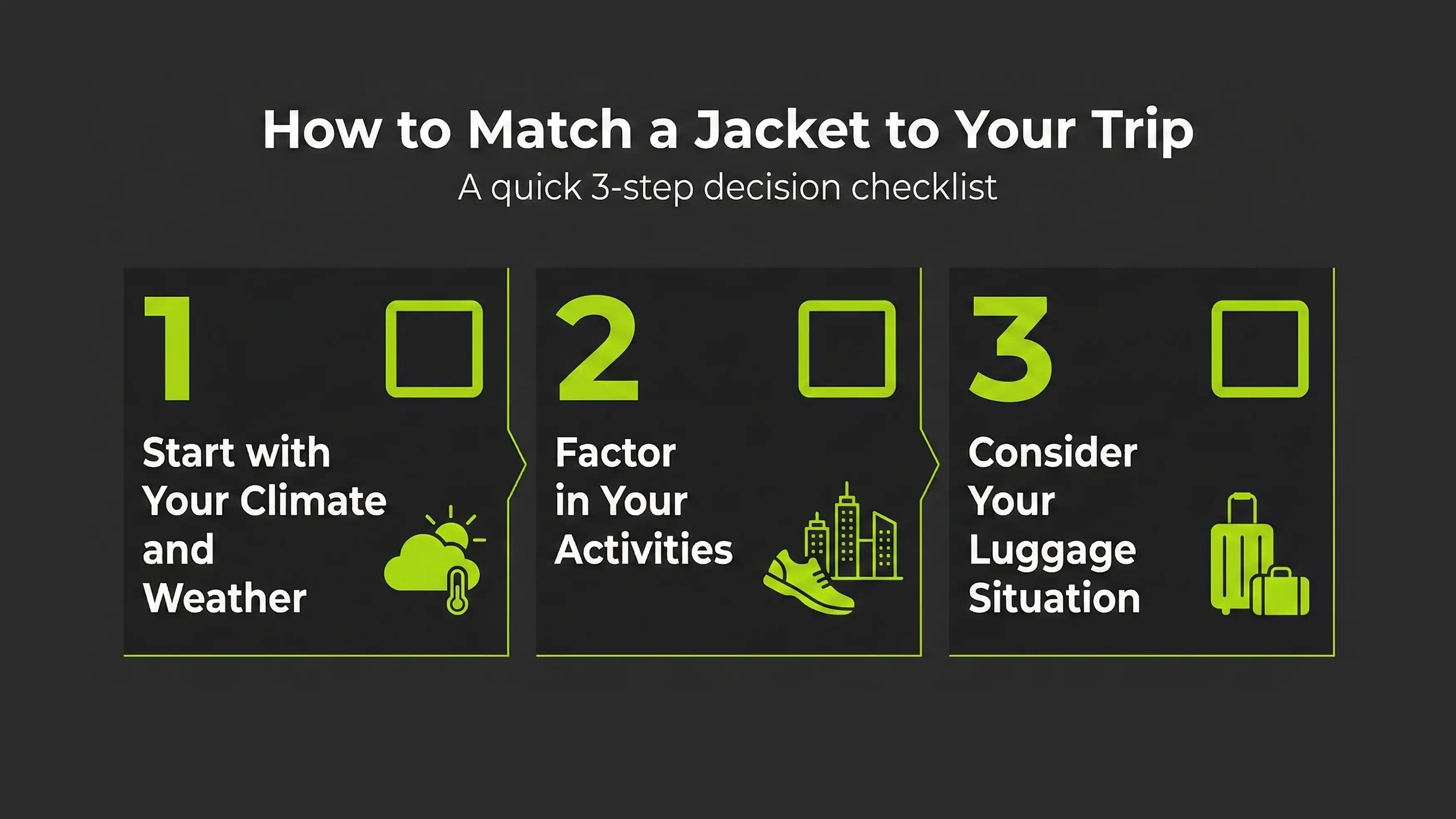
Instead of comparing brands right away, it helps to figure out what type of jacket you're even looking at. Once you know the category, the decision gets a lot clearer.
| Jacket Type | Best For | Weather | Packability | Price Range |
|---|---|---|---|---|
| Rain Shell | Wet climates, layering | Rain & wind | Excellent | $40–$200 |
| Insulated (Down/Synthetic) | Cold destinations | Cold & dry | Good–Moderate | $80–$400 |
| Softshell | Active travel, hiking | Cool & mild | Good | $60–$200 |
| 3-in-1 Convertible | Multi-climate trips | Variable | Poor (bulk) | $100–$350 |
| Multi-Pocket Travel Jacket | Carry-on travelers | Mild–Cool | Good | $80–$250 |
| Lightweight Windbreaker | Warm climates | Wind & light rain | Excellent | $30–$120 |
Rain Jackets / Shells
If the forecast says it's going to rain, this is the category you look at. A proper rain shell has sealed seams and a DWR coating that makes water bead up and roll off instead of soaking in.
Waterproof means it can block steady rain, while water-resistant means it'll handle a light sprinkle at max.
Insulated Jackets (Down vs. Synthetic)
These are your actual warmth pieces. Down has a higher warmth-to-weight ratio; however, when it gets wet, it loses its loft and doesn't insulate well until it dries.
Synthetic insulation is a bit heavier but handles moisture better and dries faster. So if you're headed somewhere properly cold and dry, down is great. If it's cold but damp, synthetic can be the safer choice.
Softshell Jackets
Softshells are not the warmest or the most waterproof, but are comfortable, stretchy and breathable. Perfect for diverse scenarios ranging from day hikes to routine urban days with a bit of wind.
3-in-1 / Convertible Jackets
These are versatile with a shell layer plus a removable inner layer. Together they're warm and weather-resistant. Separate them, and you've got two jackets.
However, they tend to be bulkier and heavier than single-purpose jackets. If space in your bag is tight, this won't be your best choice.
Multi-Pocket Travel Jackets
This one's worth paying attention to. Unlike ordinary jackets, these are built with cargo-style pocket systems designed to carry gear you'd normally put in your bag. They're not heavy winter jackets, but for carry-on travellers, they solve a real problem.
Jackets like the Huge Ass Pockets' Packit Jacket take this concept further with carefully placed roomy pockets that can hold a surprising amount of gear without feeling awkward.
Lightweight Windbreakers
These are not built for harsh winters or heavy rain — just for wind, light showers, or that cool breeze at night. They weigh almost nothing and fold down small enough that you won't resent carrying them.
5 Features That Actually Matter (and 3 That Don't)
Features Worth Paying For
- Waterproofing (not just water resistance) — If rain is even a little likely, go for a jacket that really blocks water. A jacket with sealed seams or a proper water-repellent coating will actually keep you dry.
- Functional pocket system — You don't need 30+ pockets; you want the pockets in the right spots for your passport, phone, wallet, or charging cable.
- Packability — If your jacket can't fold up small, it's just going to take up space in your bag.
- Breathable fabric — A jacket that keeps rain out but traps sweat will make you miserable. You want something breathable that lets air through.
- Adjustable fit — Drawcords, cuffs, and adjustable hoods make a big difference for wind protection and layering.
Features That Are Overhyped
- Just the brand name — Focus on functionality, not the logo.
- Maximum pocket count — 30+ pockets might sound awesome, but fewer well-placed pockets are better than lots of useless ones.
- Ultra-lightweight at the cost of durability — A jacket that's super light but rips after one trip isn't saving you anything.
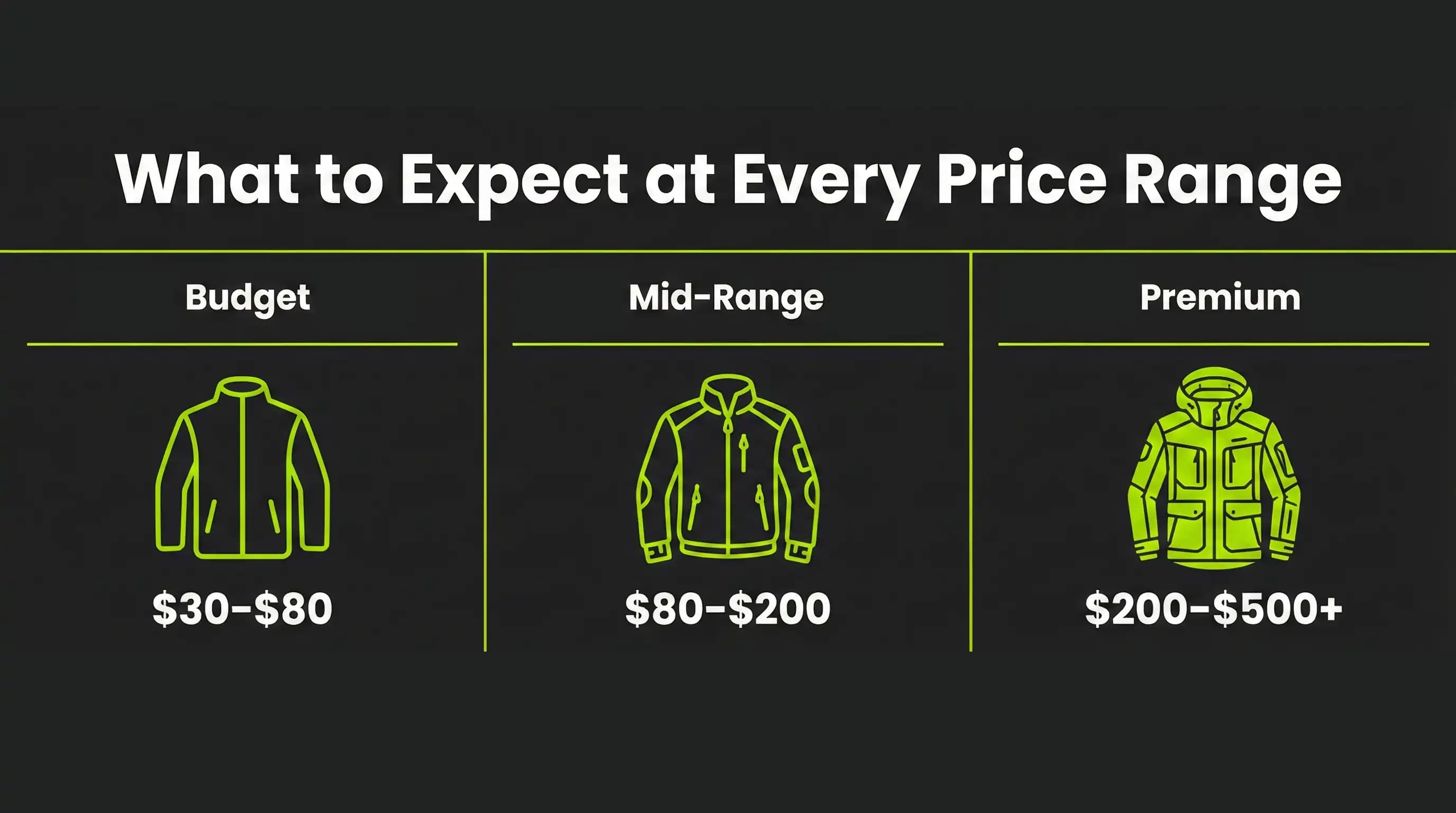
What to Expect at Every Price Range
Budget ($30–$80)
Your basic windbreakers or simple rain jackets. They can block a breeze and maybe handle a light shower. Perfect for a quick weekend or a one-off trip, but limited features and durability.
Mid-Range ($80–$200)
If you spend a bit more, you can start to feel the difference. The jacket fits better, has better material and the pockets are functional. For most travellers, this is the sweet spot.
Premium ($200–$500+)
These jackets can easily handle rain, wind, and cold. They feel solid and durable, and the pockets are smartly placed. Overkill for a quick weekend, but if you travel a lot, these are worth every penny.
Cost Per Trip: Why a $200 Jacket Can Be Cheaper Than a $50 One
A $200 jacket you use 40 times works out to $5 a trip. A $50 jacket that falls apart after just eight trips? That's over $6 a trip, plus the hassle of replacing it. Sometimes spending a little more upfront ends up saving money down the road.
5 Mistakes That Waste Money on the Wrong Travel Jacket
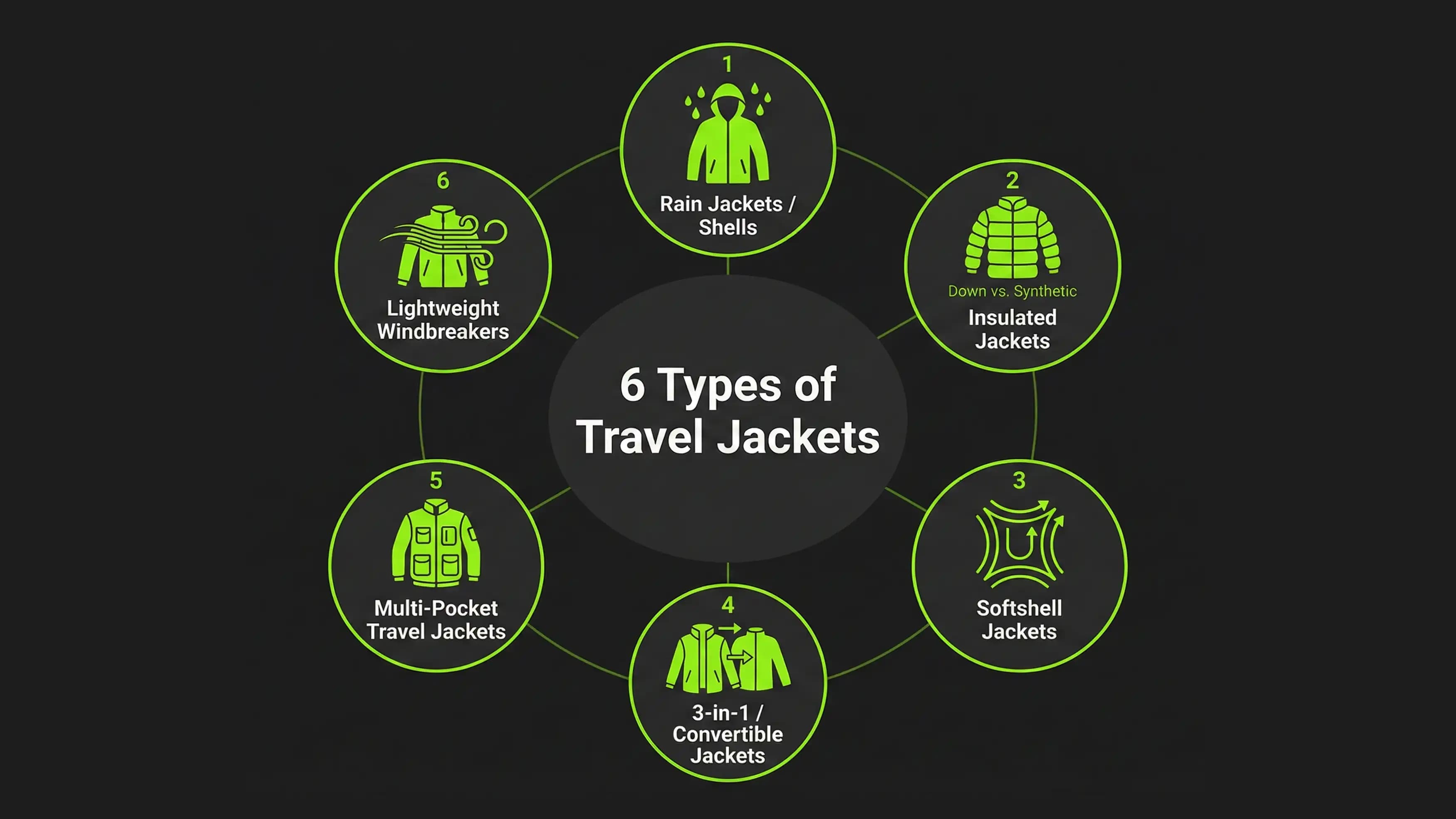
- Buying for Your Home Climate Instead of Your Destination: Just because your winter jacket keeps you cozy at home doesn't mean it's right for wherever you plan to travel.
- Choosing the Heaviest Jacket "Just in Case": If you end up never using it, it's just extra weight to drag around.
- Not Testing Packability Before Your Trip: A jacket might say packable on the tag, but that doesn't mean it'll actually fit in your bag without a fight.
- Ignoring the Return Trip: You made it fit while going away, but what about coming back with souvenirs or extra stuff?
- Skipping the Airport Test: Try it on before the trip. Can you move easily or sit in a cramped seat without feeling trapped?
Frequently Asked Questions
What's the best colour for a travel jacket?+
Can one travel jacket work for all seasons?+
How do I know if a jacket will fit in my carry-on?+
Are travel jackets with lots of pockets actually practical?+
What's better for travel: down or synthetic insulation?+
How long should a good travel jacket last?+
Your Perfect Travel Jacket Is the One You'll Actually Wear
The best travel jacket is the one you can actually throw on without thinking twice. Always match it to your destination, your activities, and how you travel.
For travellers who want to carry more and check less, jackets like the Huge Ass Pockets' Packit Jacket take it a step further. With 4 huge and smartly placed pockets, you can carry several pounds of gear right on your body instead of storing it in your bag. It's perfect for keeping essentials handy and avoiding baggage fees.